 Padua City Guide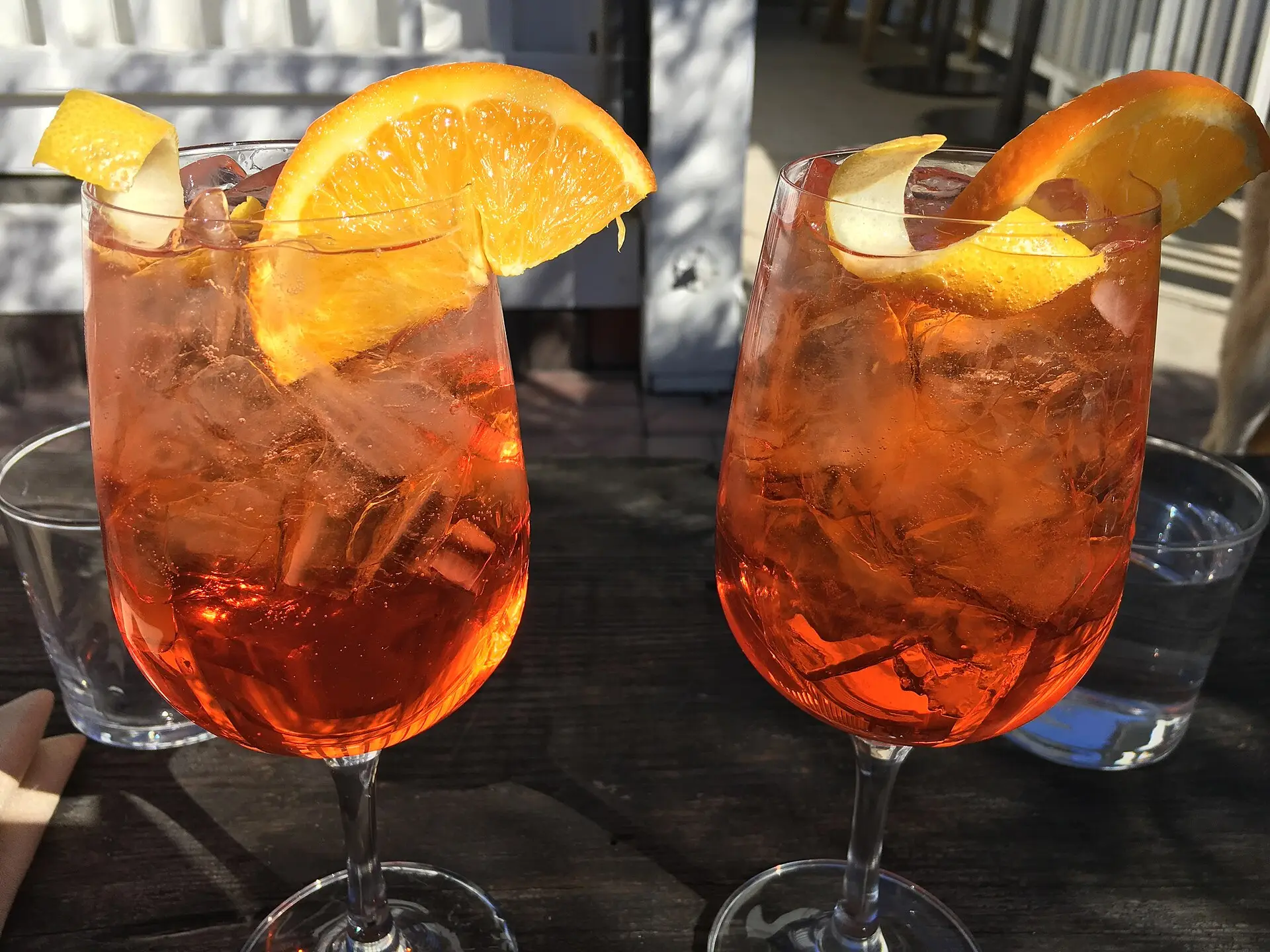
Working out where to eat in padua is easier than in most Italian art cities, because the old town is small, the prices stay Veneto-normal, and the best rooms often sit one lane back from the showpiece squares. The rhythm matters as much as the address: market stalls trade weekday mornings under the shadow of the Palazzo della Ragione, lunch is a fixed 12:30-14:30 affair, aperitivo starts around 18:00 with a spritz and a plate of cichetti, and dinner tables fill from 19:00. This guide divides the centre into four practical dining zones — the market squares, the Via Roma-Cavour shopping belt, the Prato della Valle side and the Portello-student quarter — with typical costs for each, the dishes worth ordering, and the customs (coperto, ombra, Sunday closures, August ferie) that trip up first-time visitors. Cross-reference the counter ritual in cichetti and bacari and the dish dictionary in traditional Paduan food. The full city directory sits on the Padua City Guide homepage.
Quick answer Dining zones, meal times and the value sequence in Padua
Checked on 12 September 2026: eat by zone and by clock. Lunch runs 12:30-14:30 and dinner service from 19:00, with aperitivo filling the gap from about 18:00. The value sequence: a market lunch from the weekday stalls on Piazza delle Erbe and Piazza della Frutta (about 07:30-13:00, €5.00-10.00), an evening cichetti crawl of two bacari (€15.00-25.00, mechanics in cichetti and bacari), and one seated trattoria dinner (€25.00-40.00 a head, coperto €1.50-3.00). Keep seated meals off the showpiece squares — the lanes one minute behind them serve the same plates for less. Full budget lines sit in Padua costs.
Key takeaways
- Eat with the clock: kitchens open 12:30-14:30 and from 19:00; 15:00-18:00 is drinks-and-snacks only.
- Markets first: weekday stalls on the two squares run about 07:30-13:00 and double as a €5-10 lunch.
- The counter before the table: cichetti at €1.50-4.00 build a full evening out of two bacari — see cichetti and bacari.
- Mind the piazza premium: seated tables on the showpiece squares bill visibly more than the lanes behind them.
- The dishes worth chasing — bigoli col foin, bruscandoli risotto, fritelle at Carnevale — are listed in traditional Paduan food.
Padua's four dining zones compared
The zones follow where counters and kitchens actually cluster inside the old town; the price bands are typical 2026 ranges compiled from posted menu boards and the city tourism portal, checked on 12 September 2026. Use the table to pick a base for each meal of the day.
| Zone | Character | Price band | Best for |
|---|---|---|---|
| Piazza delle Erbe & della Frutta | Market stalls by day, the densest bacari strip by night, the Salone of Palazzo della Ragione above | € — cichetti €1.50-4.00, small glasses €2.00-4.00 | Aperitivo, market lunch, the first evening of a trip |
| Via Roma-Cavour belt | Shopping-street cafes, pasticcerie and seated osterie, with Caffè Pedrocchi at the southern end | €€ — table service adds €1.00-3.00 over the bar price | Coffee stops, seated lunches, rainy-day hours |
| Prato della Valle & Santa Giustina side | Residential trattorie and pizzerie past the student flow, quieter after dark | €-€€ — primi €8.00-13.00, secondi €12.00-20.00 | Relaxed dinners after the Santo and botanical-garden loop |
| Portello & student belt | Student osterie, pubs and cheap kitchen windows north-west of the centre | € — fixed weekday lunch menus €10.00-14.00 | Budget dinners, late glasses, under-30 company |
What a day of eating in Padua costs
The budget matrix below uses real figures: bar and table prices as posted on central counters and menus during 2026, cross-checked against the running totals in Padua costs on 12 September 2026. The rule the table makes visible: standing always costs less than sitting.
| Item | Al banco (standing) | Al tavolo (seated) | Note |
|---|---|---|---|
| Espresso | €1.20-1.60 | €2.50-4.00 | The bar price is posted at the machine; tables bill separately |
| Cappuccino | €1.80-2.50 | €3.00-5.00 | A morning drink by local custom — after 11:00 you are marked as a visitor |
| Market lunch | €5.00-10.00 | — | Bread, cheese, a fried cone and fruit assembled from the Erbe and Frutta stalls |
| Cichetti crawl (5 plates + 3 glasses) | €15.00-25.00 | — | Two to three bacari, standing — see cichetti and bacari |
| Trattoria dinner | — | €25.00-40.00 | Primo, secondo, water, half a litre of house wine, coperto €1.50-3.00 |
| Full aperitivo | €8.00-15.00 | €10.00-18.00 | One drink plus the counter plates the drink effectively includes |
The Paduan dining rhythm: lunch, aperitivo, dinner and the coperto
Padua eats on a clock, and the clock is enforced. Kitchens open for lunch between about 12:30 and 14:30; arrive at 15:00 and the answer is a sandwich or a wait. Between roughly 15:00 and 18:00 the city passes through its dead zone: bars pour coffee and aperitivi, some counters keep cichetti out, but most kitchens are shut. Aperitivo starts around 18:00, dinner service from 19:00, and Paduan families sit down closer to 20:00 in summer.
The seated-table bill comes in two parts that surprise first-timers. The coperto — a cover charge of €1.50-3.00 per person — is legal and itemised: it covers bread, the table setting and the general cost of sitting down, and it is not a tip. Water is not automatically free either: ask for a carafe of tap water (acqua di rubinetto) and most kitchens will bring it; otherwise you buy mineral water by the bottle.
Two calendar traps close rooms you may have planned around. On Sundays many family trattorie shut for the evening or the whole day, because Sunday lunch is when Paduans eat out — book it, then eat simply in the evening. And in August, when much of the city takes its ferie, neighbourhood kitchens close for weeks at a stretch while the piazza-core tables carry the season. The tourist squares keep trading; the residential belt does not. If your dates fall in August, best time to visit explains what stays open.
- 12:30-14:30 — lunch service; kitchens open at the bell, not before
- 15:00-18:00 — the dead zone: drinks and snacks, no kitchens
- From 18:00 — aperitivo; cichetti counters at their fullest 18:30-19:30
- 19:00-21:30 — dinner service; 20:00 is the local peak
- Coperto €1.50-3.00 per person at seated tables — a cover charge, not a tip
- Sundays and August ferie — the two closures that rearrange plans
Bacari culture in Padua versus Venice
The bacaro is Venetian in origin — the word and the institution both — and Padua runs the same grammar at friendlier prices: small plates (cichetti) eaten standing, a small glass beside them, a counter that empties and refills through the evening. What Padua adds is proportion. Venice's canal-side tables carry a seat premium that can double a bill; Padua's counters post their prices on boards behind the bar, charge the same standing or sitting unless table service is engaged, and do most of their business with people who live here.
Two mechanics matter. First, al banco versus al tavolo: eating and drinking at the counter is the cheap, default mode; taking a table engages table service and higher prices, and in the busiest bacari it may not even be offered. Second, sequencing: a crawl works in small orders — one plate, one glass, pay, move on. Counters judge you on it. A first-timer who orders six plates and a bottle at the first stop announces themselves.
The geography is compact. The densest strip wraps the two market squares and runs down the lanes behind them — the arcades around Via dell'Arco and Via Soncin — with a second cluster towards Piazza dei Signori, where the evening drift ends. Sunday changes the map: the market stalls are gone, several counters rest, and the evening starts earlier and empties sooner — plan the crawl for a weekday if the calendar allows. Full counter-by-counter mechanics are in cichetti and bacari; the two cities are compared directly in padua or venice.
Market stalls and the merenda habit
Padua's market is the reason the food pages of this site start at the squares rather than the restaurants. On weekday mornings, from about 07:30 to 13:00, Piazza delle Erbe and Piazza della Frutta turn into the city's pantry: produce and cheese on the squares, fish and meat under cover, and the great hall of the Palazzo della Ragione sitting on top of both. The hall itself is ticketed — €8.00, Tuesday-Sunday 09:00-19:00, closed on non-holiday Mondays — so on Mondays you can shop the stalls but not climb the Salone.
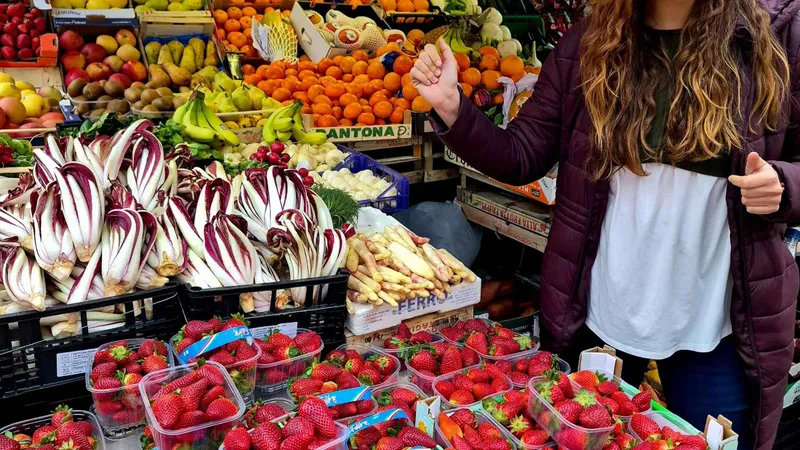
Shop like the locals do, then eat out of it. A market lunch is assembled, not ordered: bread, a wedge of Monte Veronese, a paper cone of fried fish or vegetables from a counter that also feeds the bacari, fruit for the walk. Budget €5.00-10.00 and you are eating the same ingredients the evening counters will plate at three times the price.
The merenda is the Veneto's snack habit — a mid-morning or late-afternoon small meal, and the market squares are where it lives. A sandwich on a bench, a glass of wine at 11:00 with the shopping bag at your feet, an espresso standing at the counter: all of it is normal. For the coffee itself with more history than the queue deserves, Caffè Pedrocchi keeps its historic rooms free and open daily 08:00-24:00 — see Caffè Pedrocchi.
Spritz, ombra and the customs of the small glass
The spritz is the Veneto's drink, built from the Austro-Hungarian years when soldiers and officials in Habsburg service lengthened local wine with a splash of water — spritzen, to spray. The modern version fixes the ratio and adds a bitter: prosecco over ice with Aperol for the standard orange build, Campari for a deeper red, Cynar for the brown, almost medicinal artichoke amaro that older Paduans defend. Every bacaro has its own recipe; the reliable ones build over ice with a slice of orange and an olive.
Alongside the spritz sits the ombra — literally a shadow, and in practice a small glass of wine, red or white, house-poured. The name comes from the wine sellers who once chased the Campanile's shade across San Marco's square in Venice; the glass stayed small and the name stayed Veneto. Ordering an ombra of the house red with a warm plate is the most local instruction you can give at a counter.
Prices follow the mode of eating. Standing at the counter, a spritz or an ombra runs €2.00-4.00 and cichetti €1.50-4.00; sit down and table service adds a step to the bill. During aperitivo many counters put out plates that a drink effectively includes — the evening's cheapest dinner, if you time it.
Beyond the bitters, the local bottle to ask for is Moscato fior d'arancio from the Euganean hills south of the city: the grape carries the Colli Euganei DOC, and the sweet sparkling version is protected as the Fior d'Arancio Colli Euganei DOCG. Prosecco country sits east towards Treviso, and full-day prosecco departures run out of Padua — the hills version is covered in Colli Euganei and the tour formats in food tours.
The Paduan dishes to seek out
Order by this short list and you will eat the city rather than a generic Veneto menu. Every item below is a working Paduan kitchen's card, not a festival reconstruction:
Bigoli col foin — the Paduan pasta: thick whole-wheat strands with a slow-cooked onion-and-sardine sauce (foin, hay, describes the colour the sauce turns). Nearly every honest osteria has a version, and it is the dish that separates a Paduan kitchen from a tourist one.
Risotto with bruscandoli — bruscandoli are wild hop shoots, cut in spring and sold in bundles at the market; the risotto made from them is a late-March-to-May dish and then it is gone. Out of season, order the pumpkin or radicchio risotto and move on.
Baccalà mantecato — salt cod whipped with olive oil into a cream, served on polenta or bread. Veneto-wide, but the counters here treat it as a test: bad baccalà means a bad bacaro.
Pasta e fagioli — borlotti beans and short pasta, sometimes with pancetta, always with olive oil. The winter plate.
Risi e bisi — the Veneto's spring rice-and-pea dish, on menus while the new peas last.
Goulash alla padovana — the Austro-Hungarian inheritance: beef long-stewed with onions and paprika, served over polenta.
Fritelle and galani — the Carnevale plates: raisin-filled fried dough and ribbon fritters, late January through February.
Histories, seasonal windows and the stories behind each plate are in traditional Paduan food.
Where locals eat versus the tourist piazze
The price warning first: the tables on Piazza delle Erbe, Piazza della Frutta and Piazza dei Signori are the most expensive square metres in the city. Outdoor seating carries table service, the coperto and — at the worst of them — a service percentage that appears only on the bill. The same osterie one lane back charge visibly less for the same plates, and the lanes are where the menus stop being translated.
Reading the room is straightforward. A room full of workers at 13:00 is a good room. A menu photographed onto a laminated card in four languages is a warning. Boards written in Italian and chalked daily mean the kitchen shops the market; a fixed laminated card with twenty-five dishes means the freezer does the shopping. Weekday lunch menus (menu fisso, €10.00-14.00 with a first course, a second and a side) are the professionals' deal and the visitor's best value — they exist because offices need them.
Where do locals actually go? Three patterns: the bacari strip behind the market squares for aperitivo; the residential trattorie past Prato della Valle and around Santa Giustina for family lunches; and the student osterie in the university quarter north of Palazzo Bo for fixed-price dinners. The zone table at the top of this page maps all three. For the counter ritual itself, cichetti and bacari is the detail page; for matching districts to accommodation budgets, see where to stay.
One boundary note: this guide stays inside the old town, but the districts beyond it — Pontecorvo, Arcella around the station, the Sacca — hold their own pizzerie and immigrant-run kitchens at prices the walls rarely see. They are covered in neighbourhoods, and the tram along the main axis puts any of them within a ten-minute ride. For a first visit, though, keep dinner inside the walls: the evening walk between counters and squares is half the point.
Vegetarian and coeliac eating in Padua
Padua is workable for both, with honest limits.
Vegetarians: the cichetti counter skews fish and meat — baccalà, sarde, polpette, folpetti — but always carries vegetable plates: giardiniera under oil, fried vegetables, cheese crostini, egg-based plates. In kitchens, pasta e fagioli is sometimes meatless (ask — pancetta is common), risotto comes in pumpkin, radicchio and mushroom versions, and every trattoria can assemble a vegetable primo. The Veneto's fried vegetable plates are better than the average card gives them credit for.
Coeliacs: Italy is one of the easier countries in Europe for gluten-free eating — coeliac disease is diagnosed and subsidised nationally, so kitchens understand the request. Say senza glutine and you will get a straight answer rather than a shrug. Bigoli and most counter crostini are wheat; polenta and risotto are the safe staples; many central restaurants now keep gluten-free pasta in the kitchen, and dedicated pizzerie do the same. Cross-contamination at the cichetti counter is the honest risk — fried plates often share oil.
Both diets travel better on guided walks if you tell the operator at booking, because the counters can be briefed. The catalogue's formats are compared on food tours.
Tipping and the bill, explained
Tipping in Padua is small, optional and easy to get right.
The coperto (€1.50-3.00) is not a tip — it is the cover charge, itemised on the bill. Service is included in posted prices by law, so nothing extra is owed. What people actually do: round up the bill to the next euro or two at a bar or counter; leave €1.00-2.00 after a café table; and at a good trattoria dinner, either round up by about 5-10 per cent or leave the coins from the change. Nothing is expected for poor service, and no one will chase you for it.
Card payments are universal in the centre, but tips are easier in cash — leaving a tip on a card means telling the waiter before the payment runs, which nobody remembers to do. Keep a few euro coins from the morning espresso and spend them at dinner.
One housekeeping rule: by law you receive a scontrino, the fiscal receipt, and you should keep it until you leave the premises — spot checks happen, and the receipt is the proof of purchase for both sides.
The counter at aperitivo: plates at a few euros each, small glasses to match, standing room only.
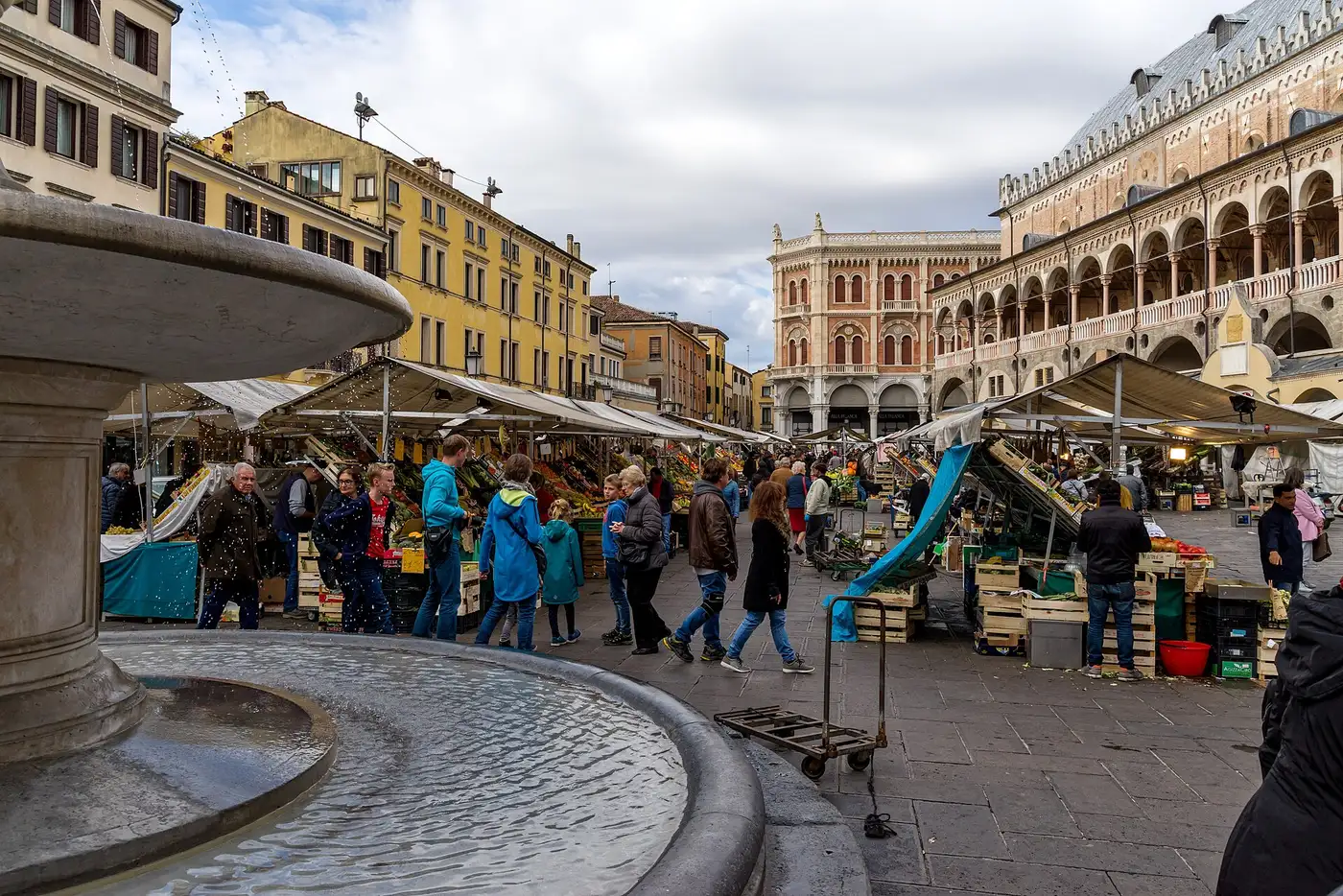
The market squares trade weekday mornings from about 07:30 to 13:00 — Padua's pantry and its cheapest lunch.
Food tours that structure the whole thing
Two catalogue formats cover the arc of this page. The Market to Osteria Food Tour runs about three hours with ten-plus tasters and wine — US$68.05 (about €62) per person, rated 4.8 from 14 reviews when checked on 12 September 2026. The Guided Spritz Walk is the short evening build: about 1.5 hours, US$124.14 (about €114) per person, 4.9 from 11 reviews. Full DIY-versus-guided comparisons sit on food tours.
 from $68.05
Padova Market to Osteria Food Tour: 10+ tasters & Wine
Dinner-replacement crawl with a spritz finish
Check Availability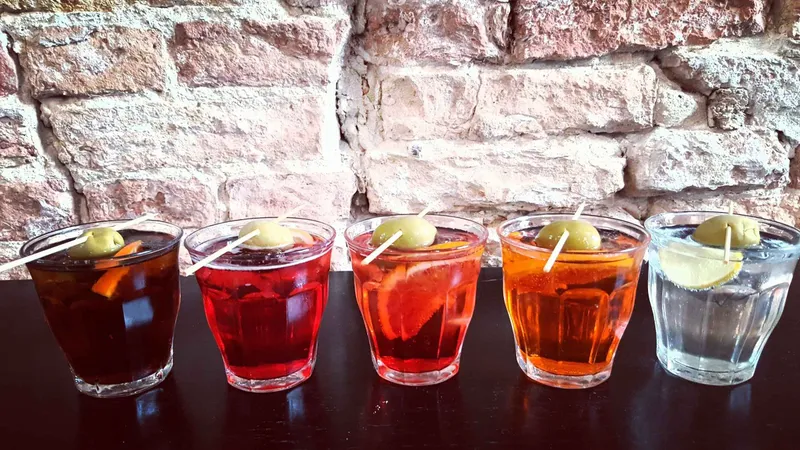 from $124.14
Padova: Guided Spritz Walk
Aperitivo hour, guided: two versions of the drink and its history
Check AvailabilityPrices, ratings and details are the platform's own, checked in Q3 2026; dollar figures are the listed prices — the platform bills in your account's currency.
Frequently asked questions about eating in Padua
Do I need to book tables in Padua?
For Saturday dinners and Sunday lunches at the good trattorie, yes — book a day ahead by phone or message. Bacari and counter service take no bookings; you walk in and order. Weekday lunches are walk-in everywhere, and the menu fisso tables turn over quickly.
What does a mid-range dinner cost per person?
A primo, a secondo, water and half a litre of house wine lands at €25.00-40.00 a head including the coperto of €1.50-3.00. A cichetti-crawl evening costs less — the budget matrix above has both — and the running city totals are in Padua costs.
Is service included, and do I tip?
Service is included in posted prices; the coperto is a separate cover charge, not a tip. Rounding up, leaving €1.00-2.00 at a café table or 5-10 per cent at a good dinner is the local range. The full mechanics are in the tipping section above.
Can I eat on the piazze without overpaying?
Yes, with rules: drink and eat cichetti standing at the counters on the squares, and save seated meals for the lanes behind them. The outdoor tables on Piazza dei Signori are the priciest seats in the city — fine for one evening drink, expensive for dinner.
What are the fixed meal times?
Lunch 12:30-14:30, dinner from 19:00. Between about 15:00 and 18:00, bars serve drinks and snacks but kitchens are shut. Aperitivo fills the gap from 18:00 — cichetti at the counter is the local dinner substitute.
Where can I eat on a Monday?
Monday is the weak day: museums such as the Palazzo della Ragione close, several residential trattorie rest, and the market stalls trade only in the morning. The piazza-core kitchens and bacari stay open — it is the residential belt that thins.
Are there vegetarian and gluten-free options?
Yes. The counters always carry vegetable plates, and trattorie do pumpkin, radicchio and mushroom risotti; ask whether pasta e fagioli contains pancetta. Say senza glutine for gluten-free — Italy's kitchens take the request seriously, and polenta and risotto are safe staples.
Is a guided food walk worth it in Padua?
On a first evening, yes: the guide orders, translates and sequences three to five stops. The catalogue's two formats are compared on food tours, and the counter ritual they teach is explained in cichetti and bacari.
Pages that pair with this guide
Four pages carry the detail this guide summarises:
Cichetti and bacari
The counter-crawl guide: ordering grammar, the ombra and a budgeted one-hour route.
Traditional Paduan food
The dish dictionary behind the menus, from bigoli col foin to Carnevale fritelle.
Food tours
The guided market-to-osteria and spritz formats, with DIY costs compared.
Padua costs
What a day of eating costs against the city's other daily budgets.
Reviewed Q3 2026 (July–September 2026); next review Q4 2026. Prices, hours and terms are set by the venue or operator and confirmed at checkout.
We may earn a commission if you book through one of our links, at no extra cost to you. Full affiliate disclosure