 Padua City Guide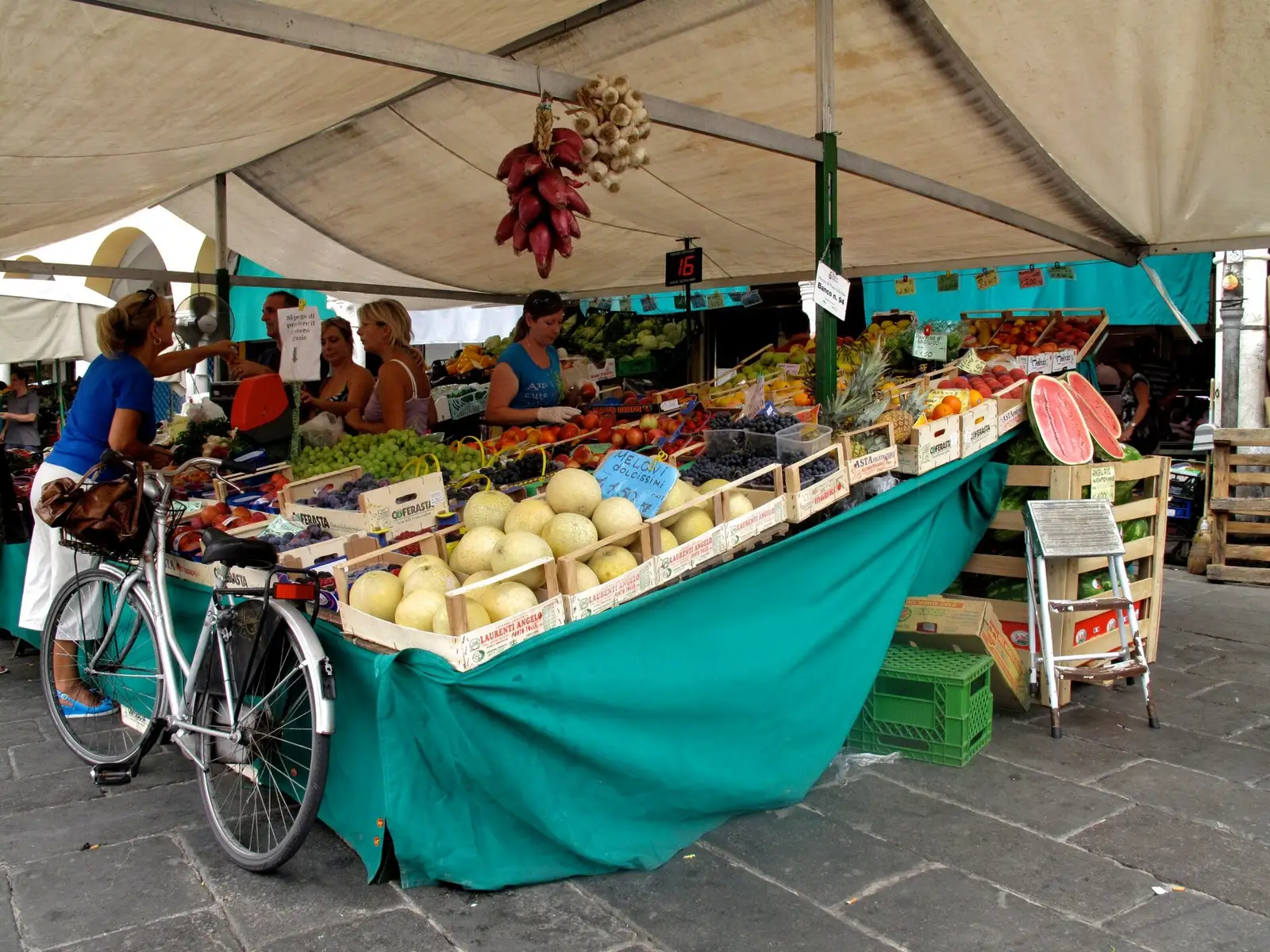
Padua rewards a list that respects its quirks: the city's single greatest artwork allots you fifteen timed minutes, several headline interiors shut on ordinary Mondays, and the finest square in Italy is an elliptical lawn at the southern edge. The things to do in padua below are ranked in the order a first-time visitor should take them — twenty-five sights, numbered straight onto the map, each with the 2026 adult price, the time it takes and a GPS pin. Sixteen of the twenty-five carry their own page in this guide, so every card links onward to verified hours and ticket mechanics. The ranking is deliberately first-visit oriented: Giotto's chapel leads, the Santo follows, and the market squares anchor the middle before the river and the hills take over. Prices were checked on 12 September 2026 against the official box offices; the wider city directory and travel planner starts on the Padua City Guide homepage.
Quick answer What the 25 sights cost, what needs booking and how they cluster
Checked on 12 September 2026: seven of the twenty-five sights below cost nothing, and the clock tower and the Pedrocchi rooms ask only a donation or the price of a coffee; the paid headliners sit between €8 and €16. Only one sight truly demands advance planning: the fresco cycle in the Scrovegni Chapel, whose timed 15-minute entries sell out days or weeks ahead — the booking mechanics are a page of their own. The tower's visits need an emailed reservation and the university tour runs fixed weekday departures; everything else is walk-up.
Key takeaways
- Book one thing: the chapel's 15-minute slot. Everything else is walk-up, fixed-times or a short email.
- Seven of the 25 sights cost nothing; the zero-euro half of the list has its own page.
- Ordinary Mondays close the Salone, the garden and most city museums — keep the basilica and piazze for that day.
- The centre is flat: chapel to basilica is twenty minutes on foot through the market squares.
- The Urbs Picta Card (48h €28 / 72h €35) covers both UNESCO sites — see the break-even page first.
25 things to do in Padua, ranked for a first visit
Every sight on the map, ranked for a first visit and grouped by theme. Cards carry the 2026 adult price from the official box offices, the time a visit genuinely takes, a booking tier (2 = book ahead, 1 = wise to reserve, 0 = walk in) and the district with GPS coordinates. Checked on 12 September 2026.
The six essentials
-
Scrovegni Chapel (Cappella degli Scrovegni)
Fresco cycle / museum from €16 (combined)15-min slot; half a day with the museumsbook-ahead tier 2 of 3
Giotto's 1303-1305 fresco cycle is the reason many visitors come at all: one barrel-vaulted room, seen in a strictly timed 15-minute slot. The combined €16 ticket also covers the Eremitani museums and Palazzo Zuckermann; slots sell out days or weeks ahead.
-
Basilica of Saint Anthony (Il Santo)
Basilica / pilgrimage church Free1-1.5 h
The pilgrimage church holds the saint's tomb and Donatello's bronze reliefs at the high altar; entry is free, every day of the year. The museum complex across the piazza costs €10 extra.
-
Prato della Valle
Square / park Free45-60 min
Italy's largest square is a 90,000 m² ellipse ringed by a canal and 78 statues — free, always open, best at sunset or on summer evenings. The abbey of Santa Giustina closes its southern side.
-
Piazza delle Erbe & the daily market
Square / market Free45 min
Fruit and vegetable stalls run every morning under the town hall's arcade; cafés and palazzi fill the square the rest of the day. Free to enter; pair with Piazza della Frutta one arch away.
-
Piazza dei Signori
Square Free30-60 min
The centre's most elegant square: portrait busts along the loggia arcades, café tables beneath, the astronomical clock tower at its corner. Free at all hours; the tower opens only at fixed times (entry n. 12).
-
Orto Botanico (UNESCO botanical garden)
UNESCO garden from €15 (€12 winter)1-1.5 h
The world's oldest academic botanical garden (1545) and a UNESCO site since 1997: Renaissance horti, the Goethe palm and the Biodiversity Garden greenhouses in one ticket. €15 (€12 November-February); closed ordinary Mondays.
Museums, palazzi & the university
-
Palazzo della Ragione (il Salone)
Civic palace from €830-45 min
The enormous medieval hall above the market squares carries one of Europe's largest unsupported wooden roofs and a painted astrological cycle of hundreds of panels. €8, Tuesday-Sunday 9:00-19:00, closed ordinary Mondays.
-
Baptistery of the Duomo & Diocesan Museum
Sacred art / baptistery from €15 (combo)1-1.5 hbook-ahead tier 1 of 3
A small Romanesque baptistery frescoed floor to ceiling by Giusto de' Menabuoi, paired with the Bishops' Palace hall and the Diocesan Museum in a €15 combo. Audioguide slots pace the entry; the cathedral next door is free.
-
Palazzo Bo & the anatomical theatre (University of Padua)
University palace / guided tour from €10 (tour)45 minbook-ahead tier 1 of 3
The university, founded in 1222, opens its historic core only on its own guided tour (€10, weekdays): the courtyard, the old lecture halls and the carved wooden anatomical theatre. Fixed weekday departures — reserve a few days ahead.
-
Musei Civici agli Eremitani & the Ovetari Chapel
Art museum from €16 (combined)1.5-2 hbook-ahead tier 2 of 3
The city museums wrap around the chapel: archaeology for Roman Padua, a picture gallery from Giotto's circle onward, and the Ovetari Chapel, where Mantegna's early frescoes were reassembled from 1944 bomb fragments. Same €16 combined ticket.
-
MUSME, Museum of the History of Medicine
Science museum from €121-1.5 h
Set in the old hospital of San Francesco Grande, MUSME tells Padua's medical story with hands-on, multimedia stations — the standout rainy-day option for families. €12; confirm opening days before setting off.
Towers, cafés & the old ghetto
-
Torre dell'Orologio (astronomical clock tower)
Clock tower Free (donation)30 minbook-ahead tier 2 of 3
The 15th-century astronomical clock still runs on its original mechanism, and volunteer guides open the interior only on scheduled days at fixed times. Entry is free with a voluntary donation; reserve by email to [email protected] first.
-
Caffè Pedrocchi
Historic café / museum Free30-60 min
The 'café without doors' runs 08:00 to midnight, ground-floor historic rooms free — you pay only for what you order. The house speciality is the mint-cream caffè Pedrocchi; the Risorgimento museum upstairs is €5 (Tue-Sun).
-
La Specola & Porta Portello
Landmark / observatory Varies20-30 minbook-ahead tier 2 of 3
The former astronomical observatory in a medieval tower at the Portello bend is a striking walk-by landmark; interior visits are limited and booked through the observatory. Tower, gate and river bends are pinned on our Padua map.
-
The former ghetto, Synagogue & Jewish Heritage Museum
Guided visit See tour card1.5 hbook-ahead tier 1 of 3
The narrow streets around Via San Martino e Solerino hold the restored Synagogue and the Jewish Heritage Museum, opened on guided visits rather than walk-in — the heritage tour is the cheapest departure in our catalogue; its price sits on the tour card.
Food & drink
-
Cicchetti & bacari counters
Food & drink from €1.50-4.001-2 h
Padua's standing snacks — small bites at €1.50-4.00 with a spritz alongside — cluster in the lanes between the market squares and Via Soncin. Evening is the ritual hour; our cicchetti page maps the counters.
-
Trattorie & the Paduan table
Food & drink Varies1-2 h
From trattorie serving the classic rice-and-pea dishes to the café belt on Via Roma, the city eats well at every price. Our where-to-eat guide sorts the tables by district, price band and booking need.
Quiet corners, river & days out
-
Duomo (Cathedral of Santa Maria Assunta)
Cathedral Free20-30 min
The cathedral's calm, cool nave is free to enter and stays open daily (sightseeing pauses during Mass). The frescoed Baptistery beside it is the ticketed half of the pair.
-
Abbey of Santa Giustina
Abbey church Free45 min
One of the largest sacred buildings in the world, free to enter, with the tomb of St Luke the Evangelist among its side chapels. Hours shift with the liturgy — mornings and late afternoons are the safe windows.
-
Giardini dell'Arena (Roman amphitheatre park)
Park / Roman remains Free20-30 min
The chapel's queue forms inside the arcaded bowl of the Roman amphitheatre, now a public park of plane trees and exposed Roman masonry — free, and the one part of the complex you can photograph freely.
-
Biodiversity Garden greenhouses
Greenhouse complex from €15 (incl.)30-45 min
Inside the garden's walls, the 2014 greenhouses stage the planet's climates on a single routed walk — a wet-weather half-hour included in the €15 ticket.
-
Riverwalks: Lungargine Rovetta & Riviera dei Ponti
River walk Free45-60 min
Follow the Bacchiglione north from the Specola along the Lungargine Rovetta towpath, or take the Riviera dei Ponti stretch by Porta Portello — the city's most local free walk. The full free circuit has its own page.
-
Venice on the regional train
Day trip (rail) See guideFull day
Padova Centrale puts Venice's Santa Lucia about half an hour away on frequent regional trains — a half-day or full-day escape from this list. Our Venice page carries the train mechanics and a day plan.
-
The Colli Euganei volcanic hills
Day trip (hills) See guideHalf to full day
The volcanic hills southwest of the centre — Praglia abbey, walled Arquà Petrarca, spa towns and wine roads — sit roughly twenty minutes away by car. Our Colli Euganei guide sorts the options by half-day and full-day.
-
Day trips beyond the lagoon
Day trips hub See guideFull day each
Verona, Vicenza, Ferrara and Bologna all sit on direct rail lines from Padova Centrale. The day-trips hub compares them by journey time, cost and what the day buys you.
Numbers match the list — tap a pin for the guide.
The ranked twelve at a glance: price, time, booking
The figures below come from the official box offices and our own ticket guides, re-checked on 12 September 2026. They cover the top twelve of the ranking above — the twelve a short stay should work through — sorted here by rank, with the cost side spelled out.
| Sight | Price | Time needed | Book ahead |
|---|---|---|---|
| 1. Scrovegni Chapel | €16 combined (plus the mandatory booking, already included) | 15-min slot; half a day with the museums | Yes — days to weeks ahead |
| 2. Basilica of Saint Anthony | Free (museum complex €10) | 1-1.5 h | No |
| 3. Prato della Valle | Free | 45-60 min | No |
| 4. Piazza delle Erbe & market | Free | 45 min | No |
| 5. Piazza dei Signori | Free | 30-60 min | No |
| 6. Orto Botanico | €15 (€12 November-February) | 1-1.5 h | No |
| 7. Palazzo della Ragione | €8 | 30-45 min | No (Tue-Sun only) |
| 8. Baptistery & Diocesan Museum | €15 combined | 1-1.5 h | Audioguide slot on arrival |
| 9. Palazzo Bo university tour | €10 (weekdays) | 45 min | Yes — fixed weekday departures |
| 10. Musei Civici agli Eremitani | €16 combined (with the chapel) | 1.5-2 h | Same booking as the chapel |
| 11. MUSME (museum of the history of medicine) | €12 | 1-1.5 h | No |
| 12. Torre dell'Orologio | Free, voluntary donation | 30 min | Yes — by email, fixed times |
Four departures that fit this list
A guided departure is not required for any sight above, but four of them earn their place: a small-group walk that holds a chapel slot for you, a chapel-only tour at the catalogue's lowest price, a resident-led orientation for the arrival morning, and a low-effort cart loop for the long haul between the northern and southern edges. Prices sit on each tour card.
 from $69.61
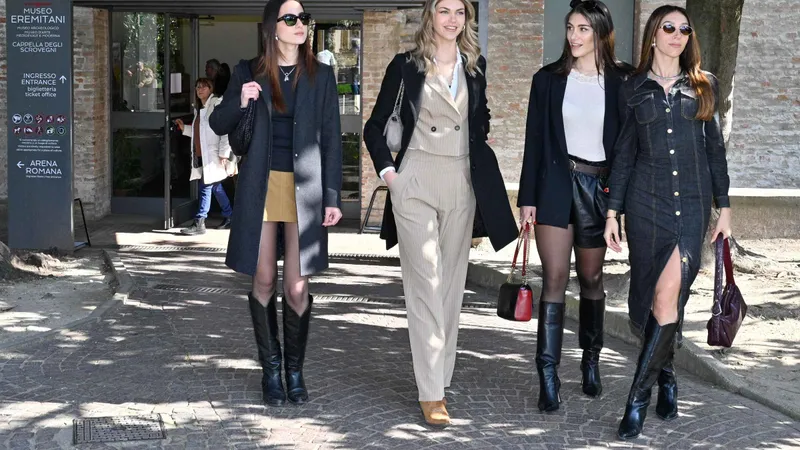
Padua: Small-group walking tour with the Scrovegni Chapel
Best value: the slot and the fresco context in one booking
Check Availability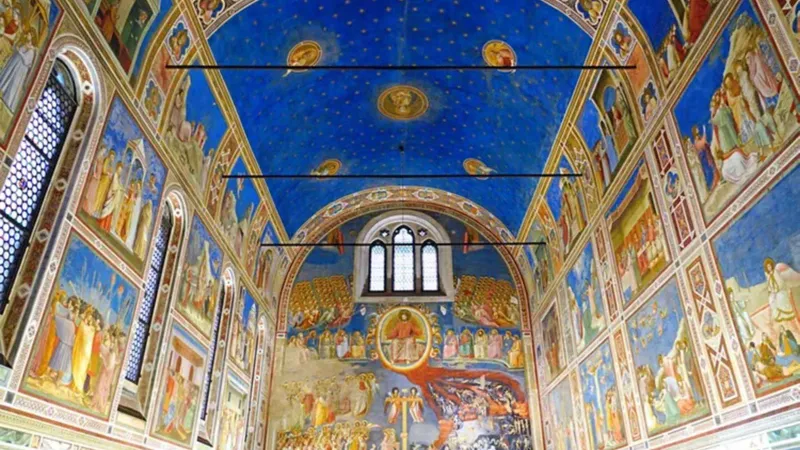 from $45.25
Guided Tour of Giotto's Scrovegni Chapel
The fresco deep-dive with the slot handled for you
Check Availability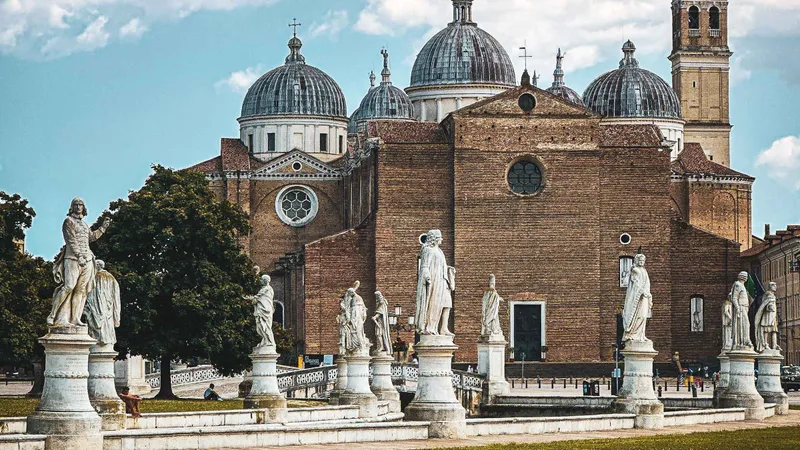 from $69.61
Padua: Experience Padova Like a Local – Guided Tour
The local-life pick: squares, alleys, and a tasting at Pedrocchi or the market
Check Availability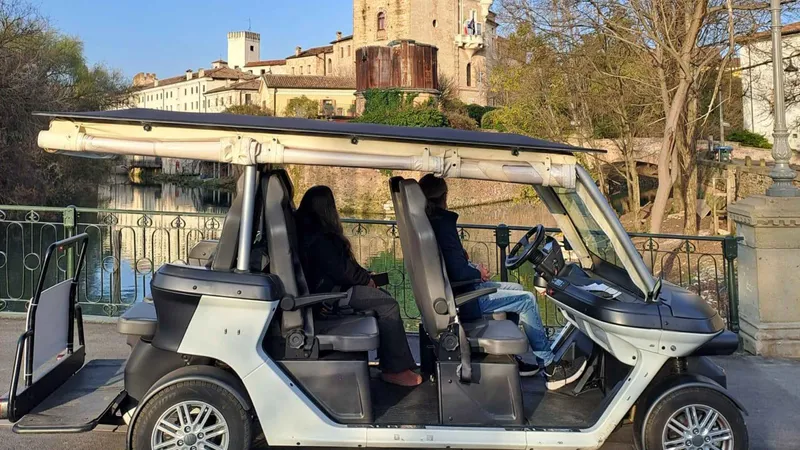 from $61.49
Prices, ratings and details are the platform's own, checked in Q3 2026; dollar figures are the listed prices — the platform bills in your account's currency.
The two UNESCO inscriptions and what they cover
Padua holds two separate UNESCO listings, and they are easy to confuse because the city pass is named for only one of them. The older inscription dates from 1997, when the Orto Botanico was listed as the world's oldest academic botanical garden: founded in 1545 by the Republic of Venice for the university's medical faculty, it still occupies its original site beside the basilica quarter, and its 2014 Biodiversity Garden greenhouses share the €15 ticket.
The newer inscription came in 2021, when Giotto's fresco cycle in the Scrovegni Chapel — painted between 1303 and 1305 — was listed as the anchor of 'Padova Urbs Picta', a serial entry that gathers fourteen frescoed complexes across the city. The chapel is the star, but the same listing embraces the Baptistery of the Duomo and the painted great hall of Palazzo della Ragione, which is why working those two into a chapel day feels like reading the footnotes.
The practical instrument for both is the Urbs Picta Card: 48 hours for €28 or 72 hours for €35, covering the chapel network and the civic museums. Whether it pays off depends on how many paid sights you enter; our Padua Card page runs the arithmetic.
- 1997 inscription: the Orto Botanico — oldest academic botanical garden (1545), €15 / €12 winter.
- 2021 inscription: Giotto's chapel cycle (1303-1305) anchoring the fourteen-site 'Padova Urbs Picta' serial entry.
- Easy sister sites in the 2021 listing: the Baptistery of the Duomo (€15 combo) and the Salone (€8).
- Urbs Picta Card: 48h €28 / 72h €35 — break-even math on our Padua Card page.
Monday caveats and opening-day rules
Padua runs on the Italian municipal rhythm, and 'closed on Mondays' needs one refinement: it is the ordinary Mondays that close things, while most museums reopen on public-holiday Mondays. The Salone keeps Tuesday-Sunday 9:00-19:00 and shuts on ordinary Mondays; the botanical garden follows the same convention; the Risorgimento museum above Caffè Pedrocchi and the Diocesan Museum (whose morning hours end at 13:00) do too, and most of the remaining city-run museums fall in line.
The exceptions matter more than the rule. The basilica opens every day of the year; the cathedral's nave is daily; the market squares, Prato della Valle, the Arena park and the riverwalks are public space and never close. The chapel itself runs daily 9:00-19:00, including Mondays, because the slot system governs it rather than the municipal calendar. The clock tower sits outside both categories — it does not run daily at all, only on scheduled days at fixed times, so an email booking decides the day rather than the calendar.
A workable Monday, then: the chapel and the Eremitani museums in the morning slot, the basilica and Santa Giustina after lunch, the ellipse at sunset.
- Open every day: the basilica, the cathedral, the chapel (by slot), the piazze, Prato della Valle, the Arena park and the riverwalks.
- Closed ordinary Mondays: the Salone, the botanical garden, the Pedrocchi museum, the Diocesan Museum and most city museums.
- Never daily anyway: the clock tower (scheduled days, emailed booking) and the university tour (weekday fixed departures).
- Public-holiday Mondays mostly reopen the municipal sites — check the official calendar for the specific date.
How the 25 sights map onto one, two, three days
The ranking above is really a scheduling instrument. The centre is flat and about twenty minutes corner to corner, so the constraint is never distance — it is the chapel slot, the fixed-times tower and ordinary Mondays. One day swallows the top of the list if the slot is early; two days add the university, the ghetto and the river; three days buy the hills or the lagoon.
One day: the ranked twelve, compressed
Morning: the chapel slot at opening, then the Eremitani museums and the Arena park next door. Midday: the market squares with lunch from the stalls or a bacaro counter. Afternoon: the basilica, then Prato della Valle with Santa Giustina if the liturgical hours allow.
Evening: Pedrocchi. That is the spine of our tested one-day route, with door times at the link below.
| Stay | Book before arrival | What the days cover |
|---|---|---|
| One day | The chapel slot | Chapel and Eremitani, market squares, basilica and the ellipse — the top of the ranking |
| Two days | Chapel slot + university tour | Adds Palazzo Bo, the Baptistery, the clock tower if booked, the ghetto and the riverwalks |
| Three days | Chapel slot + tower email + any tour | Adds a half or full day for the Colli Euganei or Venice without touching the core list |
Two and three days: the same list, slower
With two days, split the list geographically rather than by rank: the northern half (chapel, Eremitani, Arena park, piazze, tower) on day one; the southern half (university, MUSME, basilica, Santa Giustina, the garden, the ellipse) on day two, which keeps ordinary-Monday losses manageable. Day three belongs outside the walls — the hills for landscape and wine, Venice for the lagoon.
- One day: Padua in 1 Day — the compressed top-twelve route.
- Two days: Padua in 2 Days — north/south split with the booking calendar.
- Three days: Padua in 3 Days — adds the hills or the lagoon.
- Everything sequenced: the plan hub holds the itineraries, costs and booking order.
Turn the list into daily plans
The ranking above is the index; these pages carry the mechanics, the maps and the money:
Scrovegni Chapel tickets
The €16 combined ticket: booking channels, slot releases and the evening entries.
Padua Card
The 48 and 72-hour Urbs Picta pass, with the full break-even arithmetic.
Padua in 1 Day
The tested one-day route through the top of this ranking, with door times.
Padua Map
All the sights pinned by district, with transit stops and parking.
Free Things to Do
The zero-euro half of this list, from the basilica to the riverwalks.
Questions about the Padua sight list
How many days do the sights on this list need?
One day covers the top twelve if the chapel slot is early; two days cover the full ranking; three add the hills or the lagoon. Our how-many-days page runs the options in detail.
Which sights need advance booking besides the fresco cycle?
The clock tower's free visits (by email to the volunteer guides), the university palace tour (fixed weekday departures) and the observatory tower's limited interior visits. Everything else is walk-up; the tickets guide lists which box office handles which site.
What closes on ordinary Mondays?
The Salone, the botanical garden, the Pedrocchi museum, the Diocesan Museum and most city-run museums. The basilica, the cathedral, the chapel (by slot) and all the squares and parks stay open — see the Monday guide above.
Does the 48 or 72-hour city pass pay off on this list?
It depends on how many paid interiors you enter: the card (48h €28 / 72h €35) covers the chapel network and the civic museums. Three paid sights plus the tower usually tip it; two rarely do — full arithmetic on our Padua Card page.
Can the top twelve be done in a single day?
Yes, with an early chapel slot and the museums the ticket covers on the same morning. The one-day route sequences it with door times; expect about seven hours at a steady pace, lunch included.
Is the centre walkable between the ranked sights?
Entirely — flat, largely pedestrianised, about twenty minutes corner to corner. The tram matters only for the railway station; our getting-around page covers tickets and stops.
Do I need cash at the smaller sights?
Official box offices take cards, but market stalls, bacaro counters and the tower's donation box move more easily with small change. Carry a little; the safety page has the usual cautions.
What is the quietest season for the big sights?
November to February on weekday mornings: slot availability widens and the museums empty out. Summer trades crowds for heat and long evenings — detail on our best-time page.
Reviewed Q3 2026 (July–September 2026); next review Q4 2026. Prices, hours and terms are set by the venue or operator and confirmed at checkout.
We may earn a commission if you book through one of our links, at no extra cost to you. Full affiliate disclosure