 Padua City Guide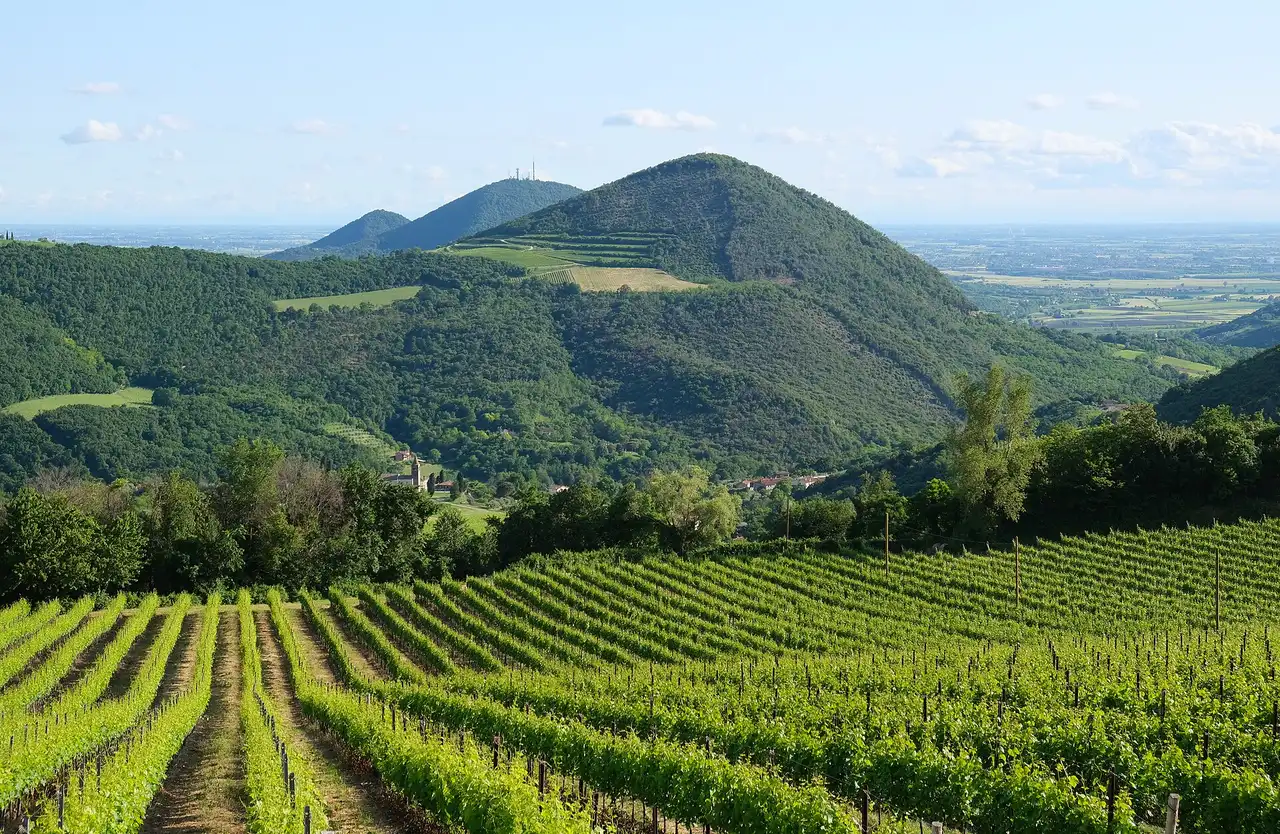
The colli euganei are the cluster of volcanic hills that rises out of the Paduan plain a few kilometres south of the city — conical heights wrapped in vineyards, olive terraces and chestnut woods, with the highest summit, Monte Venda, at 601 m. They are the one day trip on this map where the transport question disappears: a regional train reaches the twin spa towns of Abano Terme and Montegrotto Terme in about fifteen minutes, buses push deeper into the hills, and the whole area runs on local rhythms rather than tour-bus timetables. The hills hold three different days at once — the wine roads of the Strada del Vino with its Fior d'Arancio sweet muscat, the hill village of Arquà Petrarca where the poet spent his last years, and the thermal towns whose hot springs the Romans tapped at Aquae Patavinae before Padua had paved streets. This page lays out the park and its trails, the Petrarch village, the wine roads and the spa towns, with transit details, honest tour options and a plan for every energy level. For the city you leave behind, the Padua City Guide homepage indexes the rest.
Quick answer Transit, the three hill days, and what each costs
Checked on 12 September 2026: the Colli Euganei begin about 10 km south-west of Padua. Regional trains reach Terme Euganee-Abano-Montegrotto in about 15 minutes; FS Busitalia buses cover the hill villages. The three classic days are a wine afternoon around Arquà Petrarca and the Strada del Vino (Fior d'Arancio DOCG), a hiking morning up Monte Venda (601 m), and a thermal evening in Abano or Montegrotto, where the Romans bathed at Aquae Patavinae. Trails and villages are free; tastings and spa sessions are priced per operator. Guided shortcuts: padua tours lists a 1h15 hill winery run (tour-13) and a four-hour hills wine tour (tour-14).
Key takeaways
- Closest of all the trips: about 15 minutes by train to the spa towns, buses beyond.
- Volcanic ground: conical hills, chestnut woods and mineral-rich soils — the reason the wines taste of the hills.
- Arquà Petrarca: the poet's last home (died 1374), a preserved hill village and a small house museum.
- Thermal layer: Abano and Montegrotto sit over hot springs the Romans channelled at Aquae Patavinae.
- Bike country: flat approaches, hill loops and e-bike hire in the spa towns.
Key facts
Opening hours
| Regional trains Padova → Terme Euganee-Abano-Montegrotto (daily) | frequent service through the day (~15 min ride)–evening returns; FS Busitalia buses fill the gaps |
|---|---|
| Park trails and hill lanes | always open–daylight recommended |
Closed The park is open all year; Petrarch's House and the small hill museums keep weekly closure days — confirm locally before setting out
Admission
- Adult
- Short regional train fare; Petrarch's House a small entry fee; thermal-park day sessions typically cost mid-double figures
- Reduced
- Thermal parks and wine estates price per session or per tasting; check the individual operator
- Free
- Every trail, the Monte Venda summit, Arquà's lanes and viewpoints, and the villa exteriors
Planning it
- Time needed
- 5-9 hours
- Book ahead
- Optional — walk-up usually fine
- Address
- Arquà Petrarca, 35032 (PD)
Volcanic hills on the city's doorstep
The Parco Regionale dei Colli Euganei protects a scatter of conical hills that geology owes to volcanic vents active tens of millions of years ago — the same activity that heated the springs below. What visitors meet today is a working landscape: vineyard terraces climbing to ridgelines, olive groves, chestnut woods on the northern slopes, and a network of signed trails linking viewpoints, monasteries and village lanes. The park authority, based in Este, publishes the trail network and the rules; the hills themselves are also a UNESCO MAB Biosphere Reserve, a designation that reflects the farmed-and-walked character rather than any single monument.
Monte Venda (601 m) is the roof of the range and the classic hike: approaches climb through woodland to open summit slopes with the plain spread out below — on clear days the Alps mark the northern horizon and the Venetian lagoon shimmers to the east. Below the summits, quiet lanes make the hills a cycling destination of regional fame; rental shops in Abano Terme stock e-bikes precisely because the climbs are real. The transit answer is easy either way: the regional train from Padova Centrale reaches Terme Euganee-Abano-Montegrotto in about fifteen minutes, and FS Busitalia buses run onward toward Teolo, Arquà and the western villages. The station-and-validation drill is the same as everywhere else in the Veneto — see getting around padua once and it applies to every trip here.
- Regional park spanning the hill cluster between Padua and Este; headquarters and trail info at parcocollieuganei.com.
- Monte Venda (601 m): the highest summit, with signed approaches and full-plain views.
- UNESCO MAB Biosphere Reserve: a farmed, lived-in landscape, not a fenced reserve.
- Train in ~15 minutes to Terme Euganee-Abano-Montegrotto; FS Busitalia buses onward into the hills.
- E-bike hire in the spa towns turns the hill loops into a half-day ride.
Arquà Petrarca and the wine roads
Arquà Petrarca is the hills' postcard: a stone village folded over a saddle on the eastern slopes, officially listed among Italy's borghi più belli, and famous because Francesco Petrarca — the poet-scholar whose library helped seed the Renaissance — bought a house here in 1370 and spent his final years between its walls until his death in 1374. The house survives as a small museum with a modest entry fee; the village lanes, the views down the vineyard slopes and the thirteenth-century church cost nothing. Timing matters more than effort: mid-morning on a weekday the lanes are near-empty, while Sunday afternoons bring the padovani themselves up the hill.
The village sits at the heart of the Strada del Vino Colli Euganei, the wine-road network of estates that work the volcanic slopes. The appellation to know is Fior d'Arancio DOCG — a sweet, orange-blossom-scented wine from Moscato Giallo grown around Arquà and the neighbouring slopes, made in still, sparkling and passito versions — alongside the hills' dry whites and reds. Tastings run from simple counter pours to seated estate visits; the tour vans below shortcut the transport problem entirely. The table below sets out a practical loop that mixes village, cellar and viewpoint without a car.
Petrarch's house and the village
The Casa del Petrarca keeps the poet's study-plot alive with modest rooms, a listed garden and the sycamore he is said to have planted. Entry is a small fee with weekly closure days — confirm locally. Give it thirty minutes, then walk the upper lanes to the church and the belvedere above the vine rows; the descent through Via Valleselle past the fountain is the photograph.
Five stops on the wine road
A car-free loop that fills five to six hours at an unhurried pace:
| Stop | What | Time | Cost |
|---|---|---|---|
| Arquà Petrarca village | Stone lanes, church, belvedere | 1-1.5 hours | Free |
| Casa del Petrarca | The poet's final home as a small museum | 30-45 min | Small fee — confirm locally |
| Cantina tasting near Arquà | Fior d'Arancio and hill whites at the counter | 45-60 min | Per tasting — book in season |
| Teolo and the ridge viewpoints | Northern gateway village with ridge views | 30-45 min | Free |
| Monte Venda summit loop | The 601 m roof of the hills | 2-3 hours | Free |
Strada del Vino logistics
Estate websites and the wine-road consortium list open cantinas; a phone call or an email the day before secures a tasting outside walk-in hours. Without a car, the honest options are the FS Busitalia buses toward Arquà (limited on Sundays), a taxi from the Terme Euganee station side, or the guided vans below.
Abano Terme and Montegrotto: the thermal towns
The train stops at Terme Euganee-Abano-Montegrotto, the station that serves two spa towns strung along the base of the hills. Abano Terme is the grander of the pair — boulevarded hotel parks, a covered market hall and the evening passeggiata — while Montegrotto Terme is the archaeology half: this was Aquae Patavinae to the Romans, whose thermal basins and votive remains are preserved in the town's archaeological areas, some visitable in the open air, some under cover. The springs themselves run hot out of the ground; the towns have channelled them since before the Via Annia was paved, and the mud-therapy industry built on them is centuries old.
For a day tripper, the practical shape is a spa afternoon or evening: the thermal parks sell day and evening sessions — pools of varying heat, gardens, and the classic mud cycles at the hotel-run centres — at prices in the mid-double figures depending on the operator. Book a fixed session on a weekend; walk in on a weekday evening when the pools empty out. Pair the soak with dinner in Abano's lanes and the late regional back to Padua, and you have the rest-day version of a hills trip that costs a fraction of a hotel-spa weekend. The transit is the simplest of all six trips — the same getting around rules, a fifteen-minute ride, and no luggage beyond a towel.
Three ways to spend a hills day
The three plans below can be mixed across a stay; times assume the regional train from Padova Centrale and the FS Busitalia onward buses, checked on 12 September 2026. Each plan's free-versus-paid split follows the tariffs above.
| Plan | Route | Time | Best for |
|---|---|---|---|
| Wine afternoon | Train to Terme Euganee, bus or taxi up to Arquà, tasting at a cantina, dusk in the village | about 5-6 hours | Tasters and slow afternoons — tour-13 and tour-14 shortcut the transport |
| Hiking morning | Early train, trail up Monte Venda (601 m), lunch back in the spa towns | about 6 hours | Walkers; cool months; the biggest views for the least money |
| Thermal evening | Late-afternoon train, spa session, dinner in Abano, late regional home | about 4-5 hours | Recovery days after city walking; winter evenings |
Official rows first: the park authority, the province's tourism portal and the rail operator, checked on 12 September 2026. The two tour rows are the guided van options that genuinely leave from Padua into these hills — the only wine trips in the catalogue with a short ride to the vines.
Trails and villages are free; pay only for a tasting, a spa session or Petrarch's house.
| Option | Where | Price | Action | Book |
|---|---|---|---|---|
| Parco Regionale dei Colli Euganei trails and infoWalkers and cyclists | Park headquarters in Este; trailheads across the hills | Free trails; printed maps on sale | Park authority | Official site |
| Petrarch's House, Arquà PetrarcaCulture stop | Upper lane of the village | Small entry fee — confirm locally; weekly closure day | Province tourism portal | Official site |
| Thermal-park day sessions, Abano and MontegrottoSoakers | Spa parks on the edges of both towns | Mid-double figures per session — check the operator you choose | Province tourism portal | Official site |
| Regional trains Padova → Terme Euganee-Abano-MontegrottoEveryone | Padova Centrale | Short regional fare (~15 min ride) | Trenitalia timetables | Official site |
| Winery Tour & Tasting on the Padua HillsQuick tastings | About 1h15 of hill vineyards and a cellar pour | See tour card | Check Availability | Check Availability |
| Euganean Hills Guided Wine Tour from PaduaFull wine afternoons | About four hours across the hills with visits | See tour card | Check Availability | Check Availability |
Vine rows on the slopes below Arquà Petrarca — the Fior d'Arancio ground, fifteen minutes by train from Padua.
The hills on the map: spa towns, village and summit
The pins cover the two spa towns and their station, the Petrarch village, the highest summit and a wine-road estate — everything a first hills day touches.
Guided wine trips into the hills
This is the one destination where the tour catalogue and the destination genuinely overlap: two guided options leave Padua for the hills themselves — a short cellar-and-tasting run and a fuller four-hour wine afternoon with multiple stops. Both solve the hills' one friction, the thin public transport between villages, in a van. Cards and live days sit in padua tours:
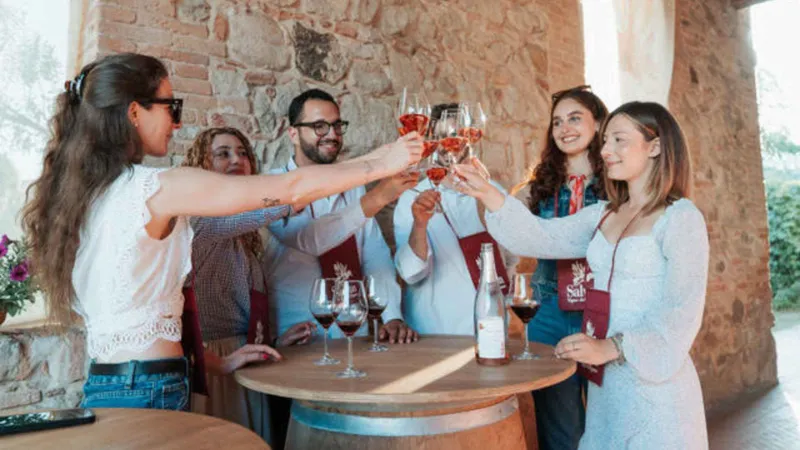 from $63.81
Winery Tour & Tasting in the Padua Hills
Seven volcanic-terroir wines in one sitting — the strongest-rated hill option
Check Availability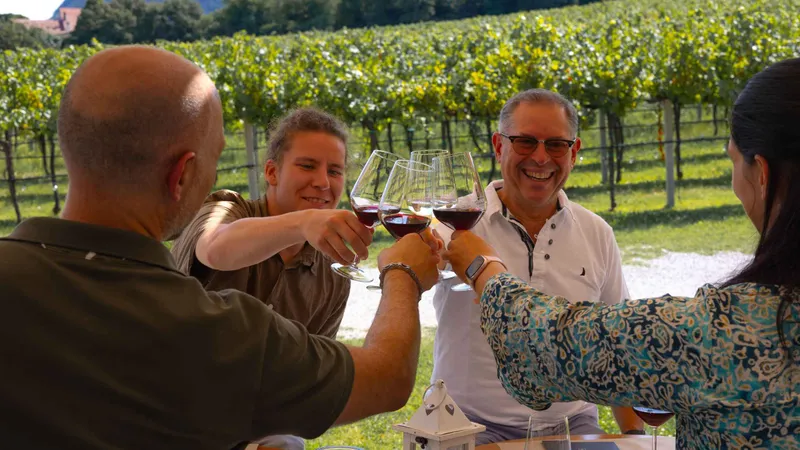 from $145.03
Euganean Hills Guided Wine Tour with Tasting From Padua
No-designated-driver solution for the Fior d'Arancio hills
Check AvailabilityPrices, ratings and details are the platform's own, checked in Q3 2026; dollar figures are the listed prices — the platform bills in your account's currency.
Frequently asked questions about the Euganean Hills
Can I see the hills without a car?
Yes, with one caveat. The regional train reaches the spa towns in about 15 minutes and FS Busitalia buses push on toward Teolo and the hill villages, but Sunday frequencies are thin and the western villages are scattered. For a wine afternoon specifically, the guided vans (tour-13, tour-14) or a taxi from the station side close the gap.
What is Fior d'Arancio?
The hills' DOCG sweet wine, made from Moscato Giallo grown on the volcanic slopes around Arquà and produced in still, sparkling and passito versions. The name — orange blossom — describes the nose exactly; it is the classic pour at tastings along the Strada del Vino Colli Euganei.
Is Arquà Petrarca worth the detour?
It is the best-preserved village in the range and the reason half the region drives up on Sundays: stone lanes, the poet's house (a small paid museum, Petrarch died here in 1374) and a belvedere over the vine rows. Weekday mornings are near-empty; Sunday afternoons are the busy version of the same place.
How hard is the Monte Venda climb?
Moderate: the summit sits at 601 m and the standard approaches climb steadily through woodland for a couple of hours on signed park trails. It is a walking-shoe route, not a technical one, and the reward is the widest view on the plain — the Alps north, the lagoon east on clear days.
Do the spa towns still have Roman remains?
Yes. Montegrotto Terme is the Roman Aquae Patavinae: thermal basins, votive deposits and bath structures from the ancient sanctuary are preserved in the town's archaeological areas, partly in the open air. Combine a morning look with an afternoon in the modern pools and the continuity is the point.
Can I mix wine and spas in one day?
Comfortably: a morning bus up to Arquà for the village and a tasting, back down by mid-afternoon, an early-evening spa session in Abano or Montegrotto, then the late regional home. The three plans table above is built to be mixed across, or within, a single long day.
Which season suits the hills best?
Spring and autumn for walking and cycling — mild air, working cellars and open views. Summer works for the thermal evenings and the shaded chestnut woods, while winter has its own draw: steam over the outdoor pools on cold mornings. Harvest time (September-October) adds cellar activity to every wine stop.
What to pair with the hills
The hills sit closest to the city of any trip on this map, so they pair with everything — these are the four most useful links:
Getting around Padua
Station, tram and ticket-validation rules that apply on the hills line too.
Padua tours
The full catalogue, including the two hill-wine vans and the prosecco day.
Verona
The arena city west — the natural second rail day after a hills afternoon.
Best time to visit Padua
Season-by-season planning that covers harvest, spa weather and trail conditions.
Reviewed Q3 2026 (July–September 2026); next review Q4 2026. Prices, hours and terms are set by the venue or operator and confirmed at checkout.
We may earn a commission if you book through one of our links, at no extra cost to you. Full affiliate disclosure